Decoding The Georgian Supra Georgia’s Sacred Feast & Cultural Tradition
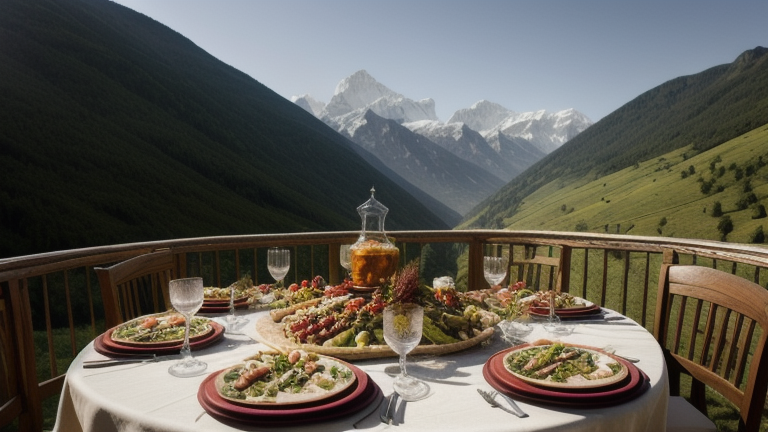
Travelers exploring the Caucasus region quickly realize that hospitality in Georgia is more than a social gesture—it is a deeply ingrained philosophy. At the center of this cultural worldview is The Georgian Supra, a traditional feast that transcends the concept of a routine dinner party. Derived from the Georgian word for “tablecloth,” the supra is an ancient living tradition where gastronomy, wine, philosophy, poetry, and community converge.
Recognized as part of Georgia’s National Intangible Cultural Heritage, the supra serves as an emotional and social anchor for the nation. Whether marking celebratory moments such as weddings and holidays (Keipi) or honoring solemn memorial occasions (Kelekhi), sitting at a supra offers travelers an authentic window into the soul of Georgian identity.
A Georgian supra is not a dinner party in any sense familiar to most outside the region. It’s a structured, almost liturgical event built around toasting, storytelling, singing and an unspoken but strictly observed social order, all presided over by a single figure whose role has no close equivalent in most other food cultures: the tamada.
Who the Tamada Is and Why the Role Matters
The tamada is the toastmaster of the supra, chosen either by the host or by consensus among guests at the start of the evening, and the role carries real social weight. A good tamada is expected to be eloquent, quick-witted, able to hold the room’s attention for hours, and deeply versed in the specific order and content that Georgian toasting tradition expects. This is not a ceremonial figurehead position — the tamada actively directs the pace and emotional arc of the entire evening, deciding when to move from one toast theme to the next and when the mood calls for something lighter or more solemn.
Being selected as tamada is considered an honour, but also a genuine responsibility. A poorly executed supra, where toasts feel rushed or disconnected, reflects on the tamada’s skill as much as on the food or wine served. Guests generally defer to the tamada’s authority for the evening without question, which is part of what gives the role its almost ceremonial feel despite the warmth and informality of the setting itself.
The Strict Order of Toasts
What surprises many first-time guests is how structured the toasting sequence actually is. Toasts don’t simply happen whenever someone feels moved to raise a glass — they follow a traditional progression, though the exact order and emphasis can vary by region and occasion.
- Early toasts typically honour peace, the host’s household, and the gathering itself, setting a respectful tone before the evening opens up.
- Toasts to ancestors and those who have passed away hold particular weight and are treated with notable solemnity, often including a moment of standing or a specific gesture of respect.
- Toasts to family, children, and the continuation of future generations usually follow, shifting the mood from reflection toward warmth and hope.
- Later toasts to friendship, love, and the guests present themselves tend to open the floor to more personal, often emotional contributions from individual guests, still generally initiated or invited by the tamada.
Each toast is typically substantial — a genuine short speech rather than a brief clink of glasses — and guests are expected to listen attentively rather than treat it as a formality to get through before returning to conversation. This pacing is deliberate: the slow progression through toast themes is part of what gives a supra its emotional depth over the course of several hours.
Polyphonic Singing as Structural, Not Decorative
Traditional Georgian polyphonic singing, recognised internationally for its distinctive multi-voice harmonic structure, is not simply background entertainment at a supra — it’s woven into the event’s structure, often emerging spontaneously between toasts or as a response to a particularly moving speech. Multiple guests join in layered vocal parts without formal rehearsal, relying on shared familiarity with traditional songs passed down informally rather than taught through written notation in most households.
This matters for understanding the supra as a whole: the singing isn’t a performance for an audience, it’s a collective act that every capable guest is expected to participate in, reinforcing the evening’s communal character rather than creating a distinction between performer and spectator.
The Ethics Beneath the Ritual
| Element | What it reflects |
|---|---|
| Toasting order | A shared value hierarchy — peace and ancestry before personal pleasure |
| Tamada’s authority | Respect for guided structure over unchecked individual indulgence |
| Communal singing | Participation over spectatorship; shared heritage over individual display |
| Generous, abundant table | Hospitality as a core social obligation rather than optional generosity |
None of this is presented to outsiders as performance, which is part of why it endures as living heritage rather than staged tradition. A supra held for visiting guests follows essentially the same structure as one held purely among family, because the ritual’s value lies in its consistency and shared meaning, not in whether anyone outside the household is watching.
What to Understand as a Guest
If you’re invited into a genuine supra setting, the most respectful approach is attentiveness: listen fully to each toast, don’t rush your glass, and understand that declining to drink alcohol is generally accommodated without issue if you communicate it early, since the tradition values participation in spirit over literal consumption. Following the tamada’s lead rather than initiating your own toasts out of turn shows an understanding of the structure, and that understanding is itself a form of respect for a tradition that has quietly preserved its own internal logic for centuries, resisting flattening into a simple “dinner with wine” narrative that outsiders sometimes default to.
The Food Itself, in Service of the Ritual
It would be a mistake to treat the supra’s food as secondary to the toasting, but it’s also true that the table is set up to sustain hours of sitting, talking and singing rather than to be consumed quickly in a conventional meal sequence. Dishes arrive in abundance and largely at once rather than in a structured multi-course order, covering an enormous range of cold starters, rich stews, cheese-filled breads and regional specialities, designed to be picked at steadily over the course of the entire evening rather than finished in any particular sequence.
This abundance is itself part of the hospitality ethic described earlier — a sparsely laid table would be read as a failure of generosity on the host’s part, regardless of how good any individual dish tasted. Guests are not expected to finish everything in front of them, and leaving food on the table isn’t considered wasteful so much as evidence that the host provided more than enough, which is precisely the point being communicated.
Why This Tradition Has Resisted Simplification
Many communal feast traditions around the world have gradually shortened or simplified under modern time pressures, but the supra’s core structure has proven unusually resilient, likely because the toasting sequence and the tamada’s role are understood locally as carrying real emotional and social function rather than being ornamental. A supra that skipped the toasts to ancestors, for instance, would feel genuinely incomplete to most Georgian hosts and guests, not merely abbreviated — which is a useful marker of how deeply embedded this structure remains in the culture’s understanding of what a shared meal is actually for.
Experiencing an Authentic Supra in Georgia
For culture-focused travelers on Surma, taking part in a supra is one of the most rewarding experiences in Georgia. While formal supras take place in family homes during holidays and life milestones, visitors can encounter authentic feast culture across the country:
-
Family Guesthouses: Staying at local homestays in winemaking regions like Kakheti or mountainous Imereti offers organic, home-hosted supra experiences.
-
Cultural Culinary Tours: Guided cultural dining programs in Tbilisi, Kutaisi, and Telavi connect travelers with experienced Tamadas and traditional polyphonic singers.
-
Ethno-Restaurants: Many traditional Georgian taverns facilitate structured feast meals with live folk music and regional wine pairings.
Sitting at a supra is ultimately about connection. Through shared bread, toasted wisdom, and Qvevri wine, The Georgian Supra transforms strangers into family, offering a memorable journey into the heart of Caucasus heritage.