Living Caravanserais and Anatolian Hospitality Heritage A Slow Travel Guide
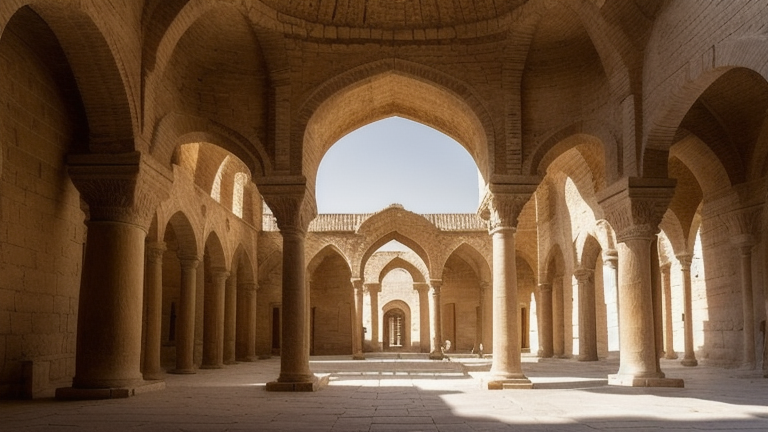
To step across the monumental stone portal of a medieval Anatolian caravanserai is to enter an architectural sanctuary built around the sacred duty of sheltering the stranger. Centuries before modern hotel chains standardized hospitality, the Seljuk rulers of Anatolia mapped out a sophisticated network of roadside fortresses (han) spaced precisely one day’s journey apart—roughly 30 to 40 kilometers.
Today, exploring these surviving stone monuments reveals far more than ancient history; it illuminates the roots of living Caravanserais and Anatolian hospitality heritage, a cultural throughline that still shapes authentic travel across rural Turkey.
+-------------------------------------------------------------------------+
|                    ANATOLIAN CARAVANSERAI LEGACY                        |
+-----------------------------------+-------------------------------------+
| Medieval Functions                | Modern Legacy                       |
+-----------------------------------+-------------------------------------+
| • Free 3-day food & lodging       | • Cultural ethos of guest generosity|
| • Fortified merchant protection   | • Restored slow travel stops        |
| • Commercial & cultural exchange  | • Architectural & heritage travel   |
+-----------------------------------+-------------------------------------+
Scattered across the Anatolian plateau, often a day’s walk or ride apart from one another, are the remains of caravanserais — fortified waystations built along Silk Road and regional trade routes to shelter merchants, pack animals and goods overnight. Their physical layout and the social obligations built into how they operated shaped a hospitality tradition that still quietly influences how travellers are received across the region today.
Why Caravanserais Were Built Where They Were
The spacing of historic caravanserais wasn’t arbitrary. They were positioned at roughly a day’s travel distance from one another, calculated around how far a loaded camel caravan could realistically cover before nightfall made travel unsafe or impractical. This meant a merchant could plan a route with confidence that shelter, water and basic provisions would be available at predictable intervals, turning what would otherwise be a dangerous open-country journey into a structured, survivable undertaking.
Many were built under royal or state patronage rather than as private commercial ventures, reflecting how seriously regional rulers took the economic value of safe, reliable trade routes. Protecting merchant traffic wasn’t an act of charity — it was recognised as directly tied to regional prosperity, tax revenue and the broader stability of trade networks stretching from Central Asia through Anatolia toward the Mediterranean and Europe.
The Architecture of Obligation
A typical caravanserai’s design reflects its social function as clearly as its practical one. A large central courtyard accommodated pack animals and goods, surrounded by covered arcades where merchants could rest, with a raised platform area often used for sleeping, trading and socialising above the animal-level ground floor. Many included a small mosque or prayer space, a hamam or washing facility, and sometimes a market function that operated independently of the resting travellers, turning some caravanserais into minor commercial hubs in their own right rather than simple overnight shelters.
- Thick stone walls and a single fortified gate reflect the genuine security concerns of travelling with valuable goods through contested or sparsely governed territory.
- The scale of many surviving structures — some large enough to house hundreds of people and animals simultaneously — reflects how significant trade volume along these routes actually was at their historical peak.
- Many caravanserais provided free or heavily subsidised lodging for a set number of nights, funded by endowments attached to the structure, meaning hospitality was built into the institution’s funding model rather than left to individual generosity.
From Institutional Shelter to Cultural Norm
This institutionalised hospitality — shelter and basic provisions offered to travellers as a matter of structural obligation rather than personal favour — is widely credited by historians and cultural scholars as a meaningful influence on the broader Anatolian and Turkish hospitality tradition that travellers still encounter today. The expectation that a guest, even a stranger, is owed genuine care and provision isn’t simply a modern tourism-industry courtesy; it traces back through centuries of a trade infrastructure explicitly built around that exact principle.
This matters for how slow overland travellers experience the region now. The warmth and generosity frequently described by visitors to rural Anatolian towns isn’t a performance for tourism revenue — it sits within a much older cultural throughline connecting back to a time when hospitality toward travelling strangers was treated as a near-sacred, institutionally supported obligation rather than optional kindness.
What Remains Today
| Then | Now |
|---|---|
| State-funded caravanserais spaced along major trade routes | Many survive as protected heritage sites; some restored as boutique accommodation |
| Free lodging funded by religious or state endowments | Modern hospitality culture still carries an expectation of generous guest treatment |
| Fortified structures built for merchant security | Architectural tourism draw — some of the most photographed heritage sites in rural Anatolia |
| Trade hub function alongside shelter | Nearby towns often retain market traditions traceable to the original trade route function |
Visiting Thoughtfully
Many surviving caravanserais are accessible as heritage sites, and a number have been carefully restored into hotels or guesthouses that let visitors stay within the original structure, generally the most atmospheric way to understand the scale and logic of the place rather than viewing it purely as a static monument. For slow overland travellers piecing together a route across Anatolia, deliberately routing a journey to pass near one or two of these structures — rather than treating them as an isolated day-trip destination — connects your own pace of travel back to the exact rhythm these waystations were originally built to support: steady, deliberate movement across the plateau, with genuine rest built into the plan rather than squeezed in as an afterthought.
Finding Lesser-Known Examples Off the Main Routes
The most famous caravanserais along well-documented historic trade routes tend to see the bulk of visitor traffic, but numerous smaller, less-publicised examples remain scattered across rural Anatolia, often maintained with far less restoration investment and correspondingly fewer facilities for visitors. Seeking these out rewards travellers willing to combine local research with a degree of flexibility, since opening access, condition and even basic signage vary considerably at less-visited sites compared to the well-known heritage attractions.
Local guesthouse owners, regional museum staff and small-town tourism offices are often the best source of current, practical information on these smaller sites, since published guides and maps can lag behind actual site conditions. Approaching a lesser-known caravanserai with the same respect you’d bring to any heritage site — checking current access rules, not disturbing any ongoing restoration work, and treating the structure as a place still connected to the identity of nearby communities rather than a purely abandoned ruin — keeps this slower, more exploratory style of travel sustainable for the sites and the communities around them alike.
Allowing extra, unscheduled time in your itinerary for this kind of discovery is itself an extension of the caravanserai’s original purpose — these were never built for travellers in a hurry, and seeking them out properly rewards exactly the unhurried pace they were designed around in the first place. A single well-chosen caravanserai, explored slowly over an unhurried afternoon, often leaves a deeper impression than several rushed stops ticked off a longer list.
Practical Tips for the Slow Traveller
-
Timing Your Visit: Autumn and spring offer comfortable temperatures and soft daylight for photography across the open courtyards.
-
Engage Locally: Take time to sit at nearby village coffeehouses (kahvehane). Connecting with local shopkeepers over tea completes the experience of Anatolian guest culture.
-
Slow Travel Mindset: Spend at least an hour absorbing the quiet acoustics, light filtration, and vaulted masonry of a single structure rather than rushing between multiple sites.
The real magic of living Caravanserais and Anatolian hospitality heritage lies in how smoothly the past mirrors the present. As you travel through Anatolia today, the stone walls may be silent, but the ancient promise of shelter, safety, and genuine welcome remains fully alive.